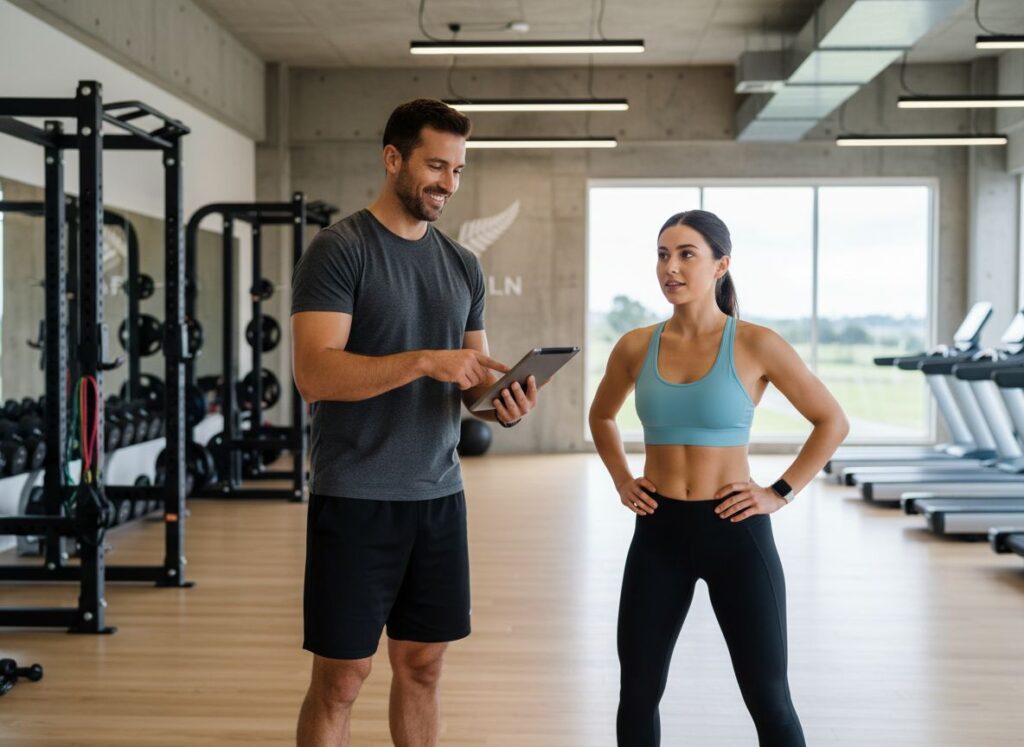
When you’re ready to take your fitness seriously, one of the first questions you’ll face is: should I work with a personal trainer or hire an online coach? It’s a decision that affects not just your wallet, but your entire approach to health and fitness. Both options promise results, but they deliver them in fundamentally different ways.
A personal trainer offers hands-on guidance right there on the gym floor, correcting your form in real-time and pushing you through those last tough reps. An online coach, on the other hand, designs your programme remotely and supports you through apps and video calls, often weaving nutrition and lifestyle advice into the mix. Neither is universally “better” — the right choice depends on your fitness level, your goals, and how you stay accountable.
For Kiwis navigating this decision, the good news is that finding the right personal trainer has never been easier. GymMe brings together every gym and personal trainer across New Zealand in one searchable platform, eliminating the guesswork and making your path to fitness faster and clearer. Whether you’re in Auckland, Wellington, or rural Canterbury, the right trainer is just a search away.
This guide breaks down exactly what each option offers, how they differ, and which one suits your specific situation. By the end, you’ll know exactly which path will get you to your goals.
Key Takeaways
- Personal trainers deliver immediate, hands-on guidance with real-time form correction and physical accountability
- Online coaches provide flexible remote support with broader lifestyle integration including nutrition and habit coaching
- Your ideal choice hinges on your fitness experience, specific goals, and whether you need in-person accountability or schedule flexibility
- GymMe simplifies finding qualified personal trainers across New Zealand, removing the research burden
- Cost structures differ significantly: trainers charge per session while coaches typically use monthly retainer models
What Is a Personal Trainer and What Do They Offer?
A personal trainer is your guide on the gym floor — someone who leads you through specific workout sessions with a sharp eye on safety, technique, and intensity. Their primary job is exercise instruction: showing you how to use equipment correctly, making sure your squat depth is right, and preventing injury while you chase your goals.
In New Zealand, most personal trainers hold REPs (Register of Exercise Professionals) registration along with a Level 4 or Level 5 Certificate in Exercise Science. This means they’ve studied anatomy, physiology, and risk management to a national standard. When you book a session, you’re paying for dedicated time — typically 45 to 60 minutes — where the trainer’s full attention is on you.
The relationship is transactional in the best sense. You show up at the agreed time, and the trainer is there waiting with a plan for that day’s workout. They’ll select exercises, choose appropriate weights, and adjust your programme based on how you’re performing in that moment. This “here and now” focus is perfect for beginners who feel intimidated walking into a gym for the first time.
“The best personal trainers don’t just count reps — they teach you why each movement matters and how it connects to your goals.”
Personal trainers excel at building your confidence with equipment, and Explanation of the Importance of trainer instructions in structured training programmes underscores how critical clear, session-based direction is to safe and effective skill development. If you’ve never touched a barbell or don’t know the difference between a lat pulldown and a cable row, a trainer removes that intimidation factor. They demonstrate each movement, watch you perform it, and correct any issues immediately.
What personal trainers typically provide:
- Real-time form correction and technique coaching
- Customized workout plans for each session
- Equipment familiarization and safety instruction
- Motivation and encouragement during challenging sets
- Progress tracking within training sessions
- Immediate adjustments based on your daily energy levels
The social element matters too. Having someone physically present creates a different kind of motivation. When you’re tempted to quit at rep eight, your trainer is right there encouraging you to hit ten. That human connection — the high-five after a tough set, the shared celebration when you lift a new personal best — is something a screen simply can’t replicate.
For Kiwis who thrive on structure and need that appointment-based accountability, personal training provides exactly that. You’re far less likely to skip a workout when you know someone is waiting for you at the gym entrance. The trainer becomes your external engine, driving you forward even on days when your internal motivation is low.
What Is an Online Coach and How Do They Work?
An online coach delivers fitness guidance remotely, typically through apps, email, or video platforms like Zoom. Rather than meeting you at the gym, they send you a structured workout programme you complete on your own schedule. You might receive a detailed plan each week, log your workouts in an app, and check in with your coach through video messages or weekly calls.
The scope of online coaching extends well beyond exercise. Research exploring whether individuals benefit from structured remote support — including a randomized control trial on Do I need coaching to achieve a learning goal — confirms that coaching combined with intentional goal framing drives meaningfully higher adherence rates than exercise-only interventions. Most online coaches embrace this holistic approach, providing guidance on meal planning, sleep hygiene, stress management, and habit formation alongside your training plan.
This is the “23 hours outside the gym” philosophy in action. Your coach recognizes that what you do when you’re not working out matters just as much as the workout itself. They’ll track your progress through photos, measurements, and performance data you submit regularly. Some coaches review videos of your lifts to check your form, though the feedback comes hours or days later rather than in the moment.
The strategic focus is long-term. Online coaches typically work in multi-month blocks, designing periodised programmes that build toward specific goals. If you’re training for the Auckland Marathon or working toward a body transformation, your coach maps out the entire progression with planned phases, deload weeks, and peak periods.
What online coaches typically provide:
- Customized training programmes delivered weekly or monthly
- Nutrition guidance and meal planning support
- Progress tracking through photos, measurements, and data
- Video form checks with delayed feedback
- Lifestyle and habit coaching
- Regular check-ins via messaging or video calls
- Educational resources about training and nutrition principles
Flexibility is the standout advantage. You’re not locked into specific appointment times or locations. If you travel for work, you can train in hotel gyms. If you prefer 6 AM workouts but your local trainers don’t start until 8 AM, that’s no problem. You complete your programme whenever and wherever suits your life.
Online coaching has grown substantially in New Zealand, particularly since COVID-19 normalized remote services. Kiwis in rural areas who previously had limited access to fitness professionals can now work with top coaches based in Auckland or even overseas. The barrier of geography disappears entirely.
However, this model demands self-discipline. There’s no one physically present to make sure you actually do the workout. You need internal motivation to walk into the gym alone, follow the programme your coach sent, and push yourself through challenging sets without someone standing beside you. For some people, that’s liberating. For others, it’s the exact reason they’ll skip workouts.
Personal Trainer vs Online Coach: Key Differences That Matter
The differences between these two options run deeper than just “in-person versus remote.” Understanding these distinctions helps you choose based on what actually matters for your success.
Accountability operates on different timelines. With a personal trainer, accountability is appointment-based. You show up because someone is waiting for you at 10 AM on Tuesday. Miss that session, and you’ve wasted their time and your money. Online coaches provide continuous accountability through daily or weekly check-ins, progress photos, and habit tracking. You’re accountable to your future self and your programme, not to a specific time slot.
Feedback speed differs dramatically. Personal trainers correct your form instantly. If your knee caves inward during a squat, they see it and fix it within seconds. Online coaches review videos or data you submit and respond hours or even a day later. For beginners learning movement patterns, immediate feedback prevents bad habits from forming. For experienced lifters who know the basics, delayed feedback is usually sufficient.
The engagement model shapes the relationship. Personal training is prescriptive and instructional. The trainer tells you what to do, and you do it. Online coaching is collaborative and mentorship-based. Your coach asks questions to understand your barriers, then works with you to design approaches. A Comparison of Coaching with other instructional methods confirms that autonomy-supportive coaching styles lead to better long-term adherence, which is precisely what online coaching models emphasize.
Time and scheduling flexibility vary enormously. Personal trainers require you to be at a specific place at a specific time. If you travel frequently for work or have an unpredictable schedule, maintaining consistency becomes difficult. Online coaches give you the freedom to train whenever your schedule allows, whether that’s 5 AM before the kids wake up or 9 PM after they’re in bed.
Relationship depth extends beyond the gym floor. Personal training relationships focus primarily on the workout session itself. Online coaching relationships often encompass life management — discussing your stress levels, sleep quality, relationship with food, and psychological barriers to consistency. The coach becomes a sounding board for the broader challenges affecting your fitness path.
Physical presence creates a tangible difference. Having someone in the room with you changes the energy. A trainer’s physical presence provides a level of focus and intensity that’s hard to replicate alone. The flip side is that some people feel self-conscious or intimidated with someone watching their every move, preferring the privacy of training solo.
| Feature | Personal Trainer | Online Coach |
|---|---|---|
| Primary Focus | Exercise technique and session intensity | Programme design and lifestyle integration |
| Main Goal | Immediate physical results and skill mastery | Long-term transformation and habit change |
| Relationship Style | Instructional and prescriptive | Collaborative and mentorship-based |
| Engagement Type | Appointment-based, gym-floor only | Continuous, 24/7 lifestyle tracking |
| Motivation Source | External (trainer pushes you) | Internal (developing your own drive) |
| Typical Outcome | Improved fitness markers and confidence | Improved life quality and autonomy |
Neither approach is universally superior. The question isn’t which is better in absolute terms, but which is better for you given your current situation, goals, and the way you stay motivated.
Which Option Is Right for Your Fitness Goals?
Your fitness experience, specific goals, and personal accountability style should guide this decision. Neither option guarantees results — success comes from choosing the right fit for your circumstances.
Choose a Personal Trainer If:
You’re completely new to the gym and feel intimidated by the equipment. Walking into a commercial gym for the first time can be overwhelming. A trainer removes that anxiety by showing you exactly what to do and making sure you don’t hurt yourself. Personal trainers are also ideal if you have a history of injuries requiring close supervision, and studies on Tactical and assessment competency in coach education highlight how real-time observation and corrective feedback are essential skills that qualified trainers bring to every session. Real-time monitoring means they can adjust exercises immediately if something doesn’t feel right.
The social motivation of face-to-face interaction matters for many Kiwis. If you’re someone who thrives on human connection and finds it easier to push yourself when someone is physically present, personal training provides that environment. The structure of scheduled appointments also helps if you struggle with self-discipline. When you’ve paid for a session and someone is waiting for you, you’re far more likely to show up.
If your primary goal is learning correct technique and building confidence in the gym, personal trainers excel here. They can physically adjust your position, demonstrate movements, and provide immediate feedback that accelerates your learning curve. This is particularly valuable if you’re self-motivated with nutrition and lifestyle outside the gym and simply need guidance on the exercise component.
Choose an Online Coach If:
You’ve been training for a while but have hit a plateau. Experienced gym-goers often know the basics of exercise but need strategic programming and lifestyle adjustments to break through sticking points. Online coaches excel at designing periodised programmes that manipulate volume, intensity, and exercise selection over months to drive continued progress.
If you have a specific performance goal — running the Auckland Marathon, competing in your first powerlifting meet, or achieving a body transformation for a wedding — online coaching provides the comprehensive approach these goals demand, a finding supported by A Study of the training competencies most valued by athletes pursuing structured, goal-oriented programmes. According to the American College of Sports Medicine, goal-specific programming with integrated nutrition guidance produces significantly better outcomes than exercise alone.
Your biggest struggle might not be the workout itself but consistency, nutrition, or lifestyle balance. Online coaches address these root causes. If you find yourself skipping workouts, struggling with emotional eating, or feeling overwhelmed by conflicting fitness information, a coach helps you build sustainable habits and navigate the psychological barriers to consistency.
Data-driven approaches appeal to analytical minds. If you want to track metrics, see trends over time, and understand the “why” behind every training decision, online coaching typically offers more detailed programming rationale and progress analysis. The flexibility to train at various times or locations is also necessary for shift workers, frequent travelers, or parents with unpredictable schedules.
Consider These Factors:
Lifestyle compatibility: Does your work schedule allow for fixed appointment times, or do you need flexibility? Do you travel frequently for work or pleasure? What’s your budget, and how does it align with the different pricing models? Do you have reliable access to a gym, or do you need a programme that works with minimal equipment?
Accountability style: Some people need external accountability — the knowledge that someone is waiting for them — to maintain consistency. Others find internal accountability through progress tracking and personal commitment sufficient. Neither style is better, but understanding yours prevents choosing an option that doesn’t match how you actually operate.
Specific goals: If you need immediate physical results and technique mastery — learning to squat safely, building confidence with free weights, or rehabilitating an injury — personal trainers provide focused, hands-on guidance. If you’re chasing long-term transformation and habit change — losing 20 kilograms, running your first half-marathon, or completely overhauling your relationship with fitness — coaching’s holistic approach addresses the broader lifestyle factors that determine success.
“The best fitness professional isn’t the one with the most credentials — it’s the one whose approach matches how you actually stay consistent.”
Hybrid models are worth considering too. Some trainers offer periodic in-person sessions combined with remote programming between meetings. This gives you the hands-on technique coaching when you need it while providing the flexibility and lifestyle integration of online coaching. For Kiwis seeking the best of both worlds, hybrid arrangements are becoming increasingly common.
Final Thoughts
The “better” option is the one that fits your current fitness level, goals, and lifestyle. Personal trainers offer the hands-on guidance, immediate feedback, and human connection that many Kiwis need to build confidence and stay consistent. Online coaches provide the flexibility, strategic programming, and lifestyle integration that others require to break through plateaus and achieve long-term transformation.
For those seeking the accountability and expertise of a personal trainer, finding the right match has never been easier. GymMe brings together every personal trainer across New Zealand in one searchable platform, eliminating the research burden and helping you connect with qualified professionals in your area. Whether you’re in Auckland, Wellington, Christchurch, or a regional centre, you can discover trainers who specialize in your specific needs and goals.
The most important step is simply taking action. Explore your options with confidence, knowing that the right support is available. Your fitness path doesn’t have to be complicated or overwhelming. With the right guidance — whether that’s a trainer pushing you through sets on the gym floor or a coach supporting you through your entire lifestyle — you can achieve the results you’re after.
Start your search today on GymMe and discover local trainers ready to help you reach your goals.
Frequently Asked Questions
Is a Personal Trainer More Expensive Than an Online Coach?
Personal trainers in New Zealand typically charge between $60 and $120 per hour for one-on-one sessions, depending on location and experience. Online coaching usually operates on monthly retainer models ranging from $150 to $400 per month, covering programming, regular check-ins, and ongoing support. While the cost-per-contact-hour may appear lower for online coaching, personal training delivers more intensive, hands-on value during each session. Your budget considerations should weigh the total value received — immediate feedback and physical accountability versus comprehensive lifestyle support — rather than simply comparing hourly rates.
Can I Switch From Online Coaching to a Personal Trainer Later?
Absolutely. Many Kiwis start with one option and transition as their needs evolve or circumstances change. Some people begin with online coaching to build foundational knowledge and confidence before investing in personal training for more advanced technique work. Conversely, starting with a personal trainer to learn proper form and gym basics, then transitioning to online coaching for greater flexibility, is equally common. GymMe makes it simple to find a personal trainer whenever you’re ready to make the switch, with trainers across New Zealand searchable by location and specialization.
How Do I Know if a Personal Trainer Is Qualified in New Zealand?
Look for REPs (Register of Exercise Professionals) registration, which is the national standard for fitness professionals in New Zealand — frameworks like the HANDBOOK AND GUIDANCE MATERIAL for coach education and training programmes illustrate how structured certification pathways protect consumers and ensure coach quality. Check that they hold at least a Level 4 or Level 5 Certificate in Exercise Science or equivalent qualifications from recognized providers. Ask about any specializations relevant to your goals, such as injury rehabilitation, strength and conditioning, or sport-specific training. GymMe’s platform helps you discover trainers with verified qualifications and clear specializations, making it easier to find professionals whose expertise matches your needs.
Do Online Coaches Provide Nutrition Advice?
Most online coaches include nutrition guidance as a core component of their holistic approach to fitness. This may range from general healthy eating principles to detailed macro tracking, meal planning, and supplement recommendations. Personal trainers typically provide basic nutritional guidance but may not offer comprehensive nutrition programming unless they hold additional qualifications. Always verify your coach’s or trainer’s credentials in nutrition before following detailed dietary advice. In New Zealand, look for certifications from recognized bodies like Precision Nutrition or formal qualifications in sports nutrition.
What if I Live in a Rural Area of New Zealand?
Living in a rural area may make online coaching more practical due to limited local trainer availability. However, GymMe’s nationwide directory includes trainers in regional centres and smaller towns across New Zealand, so you may have more local options than you realize. Some personal trainers offer hybrid models combining periodic in-person sessions with remote programming between meetings, which can work well for rural clients. Online coaching provides access to top coaches regardless of your location, eliminating geography as a barrier entirely.
Can Personal Trainers Help With Specific Goals Like Marathon Training?
Yes, many personal trainers specialize in specific athletic goals including endurance events like marathons. For highly specialized goals, look for trainers with relevant certifications — such as running coaching credentials — or competitive experience in the discipline you’re pursuing. Online coaches often excel at designing long-term periodized programmes for events like marathons, managing the volume and intensity progression over months. GymMe allows you to search for trainers by specialization, making it straightforward to find marathon-focused professionals or other specialists in your area.