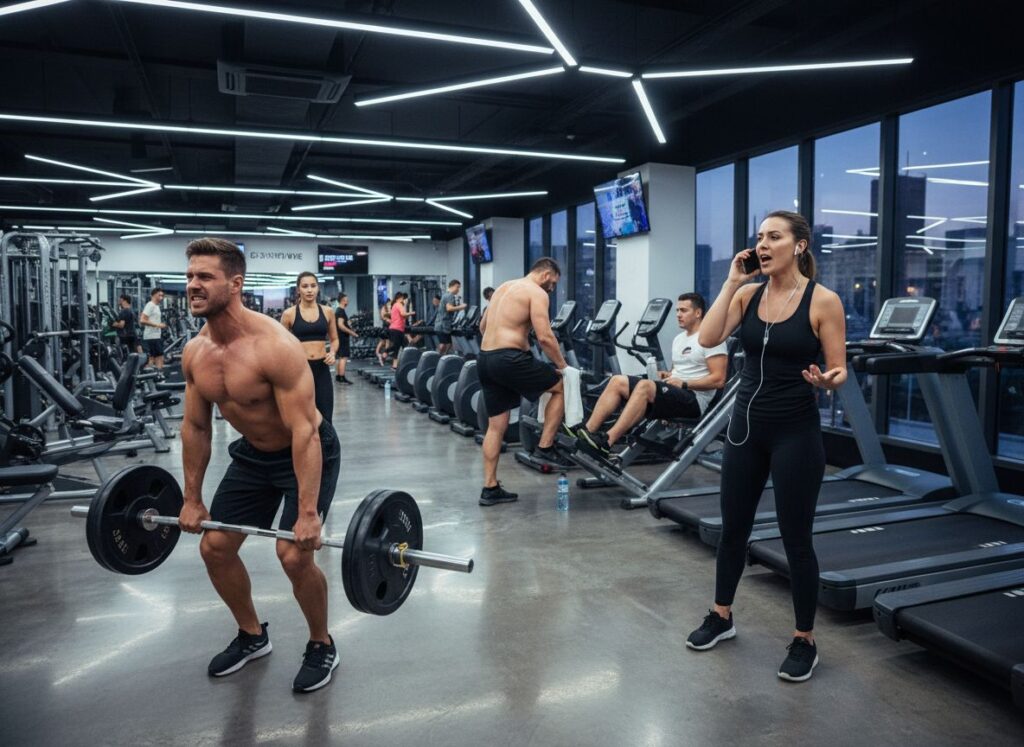
You’ve been showing up to the gym three times a week for the past two months. You’re consistent, you’re motivated, and you’re putting in the work. But here’s the frustrating part: your body looks exactly the same as it did on day one.
Sound familiar? This is the plateau that traps thousands of Kiwis every year. The problem isn’t your effort or dedication. The problem is that you’re doing the same thing over and over, and your body has already adapted to it. Your muscles have no reason to grow, your strength has no reason to increase, and your fitness has no reason to improve.
Progressive overload is the answer. It’s the fundamental training principle that dictates continuous improvement by systematically increasing the demands you place on your body. Without it, you’re simply maintaining your current state rather than changing it. This article will explain what progressive overload is, how to apply it across six practical methods, why it matters for every fitness goal, and how to track your progress while avoiding common mistakes. Whether you’re searching for your first gym through GymMe or you’re an experienced lifter looking to break through a plateau, understanding this principle is the difference between spinning your wheels and achieving real, measurable results.
Key Takeaways
- Progressive overload is the fundamental principle for continuous fitness improvement by systematically increasing training stress to force your body to adapt
- It can be applied through six methods: increasing weight, adding reps or sets, training more frequently, improving form, reducing rest periods, and increasing time under tension
- The principle is essential for all fitness goals including strength, muscle growth, fat loss, endurance, and healthy ageing
- Tracking your workouts with quantitative metrics (weight, reps, sets) and qualitative feedback (RPE) is non-negotiable for successful progression
- Progressive overload must be gradual and balanced with proper recovery to avoid injury and overtraining
What Is Progressive Overload? The Core Principle Explained
Progressive overload means gradually increasing the demands placed on your body during exercise to trigger continuous adaptation and improvement. The body adapts to stress through a three-stage process: alarm (workout stress), resistance (recovery and growth), and exhaustion (overtraining if pushed too hard).
Your body is remarkably efficient at adapting to stress. When you first perform a challenging workout, your muscles experience microscopic tears, your energy stores deplete, and you feel fatigued. This is the alarm phase. During recovery, your body doesn’t just repair this damage—it super-compensates by building back slightly stronger to handle that specific stressor better next time. This is the resistance phase, where actual growth occurs.
Here’s the critical insight: if you return to the gym and perform the exact same workout with the same weight, the same reps, and the same rest periods, your body has no reason to change further. It’s already adapted to that level of stress. You’ve reached homeostasis—a state of equilibrium where no further physiological improvement occurs.
Progressive overload is the art of staying ahead of your body’s adaptation. By incrementally increasing the difficulty of your training, you maintain a constant cycle of stress, recovery, and super-compensation. Without this progression, gym-goers hit frustrating plateaus within weeks, wondering why their hard work isn’t translating into visible results.
“The body adapts to the demands placed upon it. If those demands remain constant, so too will your results.” — Exercise Science Principle
Consider this example: if you can comfortably squat 50kg for 10 reps every week, your body has already adapted to that demand. Your muscles are strong enough, your nervous system is efficient enough, and your cardiovascular system can handle it. To force your body to get stronger, you must increase the challenge—perhaps by moving to 52.5kg, or by performing 12 reps with the same weight, or by adding an extra set.
This principle applies to all fitness levels. Whether you’re a first-time gym-goer finding your local facility through GymMe’s discovery platform or an experienced athlete training for competitive sport, the biological rules remain the same: to change your body, you must consistently prove to it that its current state is no longer sufficient.
How to Apply Progressive Overload: Six Practical Methods
Progressive overload can be achieved through six primary methods: increasing weight, adding reps or sets, training more frequently, improving form, reducing rest periods, and increasing time under tension. Choosing the right method depends on your specific fitness goal (strength, muscle growth, endurance, or fat loss).
Many Kiwis mistakenly believe that progressive overload only means “lifting heavier weights.” While increasing resistance is the most direct method, it’s far from the only one. Understanding all six methods gives you flexibility to keep progressing even when one variable hits a ceiling.
Increase Resistance (Lifting Heavier)
Adding weight to the bar or machine is the most direct form of overload and the primary driver of maximal strength development. The key is using small increments—typically 1.25kg to 2.5kg jumps on barbell lifts—to progress sustainably without sacrificing form.
For example, moving from a 60kg squat to a 62.5kg squat while maintaining full depth and control represents genuine overload. For smaller muscle groups like biceps or lateral deltoids, micro-loading with fractional plates (0.5kg or even 0.25kg) becomes essential, as a standard 2.5kg jump might represent a 25-50% increase in load, which is unsustainable.
Add Volume (More Sets or Reps)
Volume is calculated as Sets × Reps × Weight, and increasing any component of this equation creates overload. You can progress by:
- Adding reps: Performing 10 reps with a weight you previously lifted for 8 reps
- Adding sets: Moving from 3 sets to 4 sets of the same exercise
This method is particularly effective for muscle growth (hypertrophy) and metabolic conditioning. It also allows progression even when weight increases aren’t possible, making it valuable for intermediate lifters who can no longer add weight every session.
Train More Frequently
Training a muscle group twice per week instead of once increases the total stimulus for adaptation, provided intensity is carefully managed to avoid overtraining. This method is particularly effective for breaking through plateaus in experienced lifters, as it allows for more total volume to be distributed across the week. However, it requires intelligent programming to maintain adequate recovery between sessions.
Improve Exercise Technique and Range of Motion
Performing the same weight with fuller range of motion, better control, and elimination of momentum makes exercises significantly harder and increases the work performed by target muscles. This is a legitimate progression method, especially for especially for beginners who should master technique before adding weight.
A 100kg half-squat isn’t progressive overload compared to an 80kg full-depth squat—the latter places more tension on the target muscles. Working with a qualified personal trainer (found through GymMe’s trainer directory) helps establish proper technique from day one.
Reduce Rest Periods
Shortening rest between sets—for example, moving from 2 minutes to 90 seconds—increases workout density by forcing your body to recover faster under fatigue. This creates metabolic stress and is particularly effective for endurance, cardiovascular conditioning, and fat loss. While it may not be the primary driver of maximal strength, it significantly improves work capacity.
Increase Time Under Tension
Slowing down the movement, particularly the eccentric (lowering) phase, increases the duration of mechanical tension on the muscle. For example, taking 3-4 seconds to lower the weight during a bench press creates more muscle damage and metabolic stress without requiring heavier loads. This method is effective for hypertrophy and improving the mind-muscle connection, allowing you to extract more growth stimulus from the same weight.
Why Progressive Overload Matters for Your Fitness Goals
Progressive overload is the universal driver of physical improvement across all fitness goals, not just bodybuilding. Without it, training becomes maintenance rather than transformation—you’re exercising but not progressing.
Muscle Growth (Hypertrophy)
For muscle growth, progressive overload creates the mechanical tension and metabolic stress required to stimulate protein synthesis and muscle fibre growth, as demonstrated by research on Muscle Hypertrophy, Strength, and hormonal responses across different training loads. Your muscles grow in response to being challenged beyond their current capacity. Increasing volume (more sets and reps in the 6-12 rep range) and improving the mind-muscle connection are primary drivers for this goal.
Fat Loss
In fat loss, progressive overload plays a counterintuitive but critical role. When you’re in a calorie deficit, your body is primed to shed weight—but it doesn’t distinguish between fat and muscle. Maintaining or even increasing your strength levels while losing weight sends a powerful signal to your body that it must preserve muscle mass, providing that the weight lost comes predominantly from fat stores rather than hard-earned muscle.
Without progressive overload during a cut, you risk becoming a smaller, weaker version of yourself rather than achieving a lean, defined physique.
Strength Development
For strength development, progressive overload is applied by lifting heavier percentages of your one-rep max (1RM), typically in lower rep ranges (1-5 reps) with longer rest periods. This trains your nervous system to recruit more muscle fibres and improves intermuscular coordination. According to research from the National Strength and Conditioning Association, progressive increases in load are the primary stimulus for neural adaptations that drive strength gains, a finding further supported by studies on Progressive Overload Affects the magnitude of muscle hypertrophy.
Athletic Performance
For Kiwi athletes competing in rugby, netball, or other sports, progressive overload isn’t just about heavier weights—it’s about power and velocity improvements. This might mean moving the same weight faster, jumping higher with the same body weight, or improving sprint times. The principle remains the same: you must continually challenge your body beyond its current capacity.
Longevity and Healthy Ageing
For longevity and healthy ageing, progressive resistance training is the primary defence against sarcopenia (age-related muscle loss) and osteoporosis. Research published by the American College of Sports Medicine shows that adults who engage in progressive strength training maintain bone density, functional independence, and metabolic health well into their later years. For older New Zealanders, gradually increasing resistance helps maintain quality of life and reduces fall risk.
Without progressive overload, gym-goers experience frustrating plateaus where their body composition and performance stop improving despite consistent effort. You’re burning calories and maintaining your current fitness, but you’re not changing. GymMe connects New Zealanders with qualified personal trainers holding recognised NZ fitness certifications like NZCEA Level 4, who understand how to structure progressive programmes tailored to individual goals and make certain every training session moves you forward.
Tracking Your Progress: The Key to Consistent Overload
You cannot manage what you don’t measure—tracking is non-negotiable for progressive overload, a principle reinforced by frameworks examining Monitoring and Scalability of high-load systems for real-time performance compliance. Comprehensive tracking includes both quantitative metrics (weight, reps, sets) and qualitative feedback (how hard the workout felt).
Relying on memory in a busy gym environment is a recipe for stagnation. Without documentation, you’re guessing rather than progressing. You might think you used 50kg for squats last week, but was it 50kg for 8 reps or 10 reps? Did you do 3 sets or 4 sets? These details matter enormously when determining whether you’re ready to increase the challenge.
What to Track
Your training log should capture the following for every workout:
- Exercise name
- Weight used for each set
- Number of sets and reps completed
- Rest periods (optional but helpful)
- Rate of Perceived Exertion (RPE) on a 1-10 scale
RPE is particularly valuable because it provides qualitative context. A weight might feel like an 8 out of 10 effort one week and a 7 out of 10 the next. Even without changing the weight, this indicates your body has adapted and you’re ready to progress.
Identifying Patterns
Reviewing your logs reveals clear patterns. If you notice you’ve used the same weight for the same reps over three consecutive sessions, it’s a definitive indicator that you’re no longer overloading the system. Time to increase the challenge. Conversely, if your performance is declining week over week despite adequate rest, it may signal overtraining or insufficient recovery.
Tracking Methods
Tracking methods vary based on personal preference:
- Fitness apps like Strong, Hevy, or MyFitnessPal allow you to log workouts digitally and visualise progress over time
- Digital spreadsheets provide customisable tracking templates
- Traditional training notebooks offer a tactile, distraction-free option
The method matters less than the consistency.
Many personal trainers in New Zealand (discoverable through GymMe’s platform) provide clients with tracking tools and branded training journals as part of their service. This not only provides accountability but also allows the trainer to review your progress between sessions and make informed adjustments to your programme. Tracking creates motivation by making “small wins” visible—adding one rep to your bench press is measurable progress worth celebrating.
Avoiding Common Progressive Overload Mistakes
Progressive overload must be gradual and balanced with proper form and recovery to avoid injury and burnout. The most common mistakes are sacrificing technique for heavier weights, progressing too quickly, and ignoring the need for deload periods.
Ego Lifting: Sacrificing Form for Weight
“Ego lifting” is the most dangerous pitfall. This occurs when a trainee prioritises the weight on the bar over the quality of the movement. Adding 5kg to your squat might feel like progress, but if it results in a partial range of motion, excessive forward lean, or using momentum to “bounce” out of the bottom, the target muscles are likely receiving less effective tension even though the weight is higher. You’ve increased injury risk without providing genuine overload. Form breakdown is false progression.
Progressing Too Quickly
The 10% rule is a useful guideline: increase one variable by no more than 10% per week, a threshold also explored in research on Migration matters in conservation where the 10% rule is modelled to assess meaningful change thresholds. For strength training, this typically translates to adding 1.25kg to 2.5kg on barbell lifts. For volume, it might mean adding one rep or one set. This gradual approach allows your connective tissues (tendons and ligaments) to adapt alongside your muscles. Tendons strengthen more slowly than muscles, and pushing too hard too fast is a common cause of tendonitis and joint pain.
Ignoring Recovery and Overtraining
Overtraining occurs when you push for constant increases without adequate recovery. Warning signs include:
- Persistent fatigue that doesn’t improve with rest
- Decreased performance despite effort
- Poor sleep quality
- Increased resting heart rate
- Mood changes (irritability or depression)
- Frequent illness due to suppressed immune function
If you’re consistently unable to match your previous performance despite adequate rest, you may be overtraining. The answer is to take a deload week or reduce training frequency.
The Importance of Deload Weeks
Deload weeks are a critical component of intelligent programming. Progression is not linear—it follows a wave pattern of stress, recovery, and adaptation. Every 4-8 weeks, most structured programmes include a deload week where volume and intensity are reduced by 30-50%. This allows your central nervous system and connective tissues to fully recover from the accumulated stress of the preceding weeks, setting the stage for the next cycle of progression.
“Progress is not made in the gym. Progress is made during recovery when your body adapts to the stress you’ve placed upon it.” — Strength and Conditioning Principle
Research confirms that planned deloads improve long-term performance outcomes compared to continuous high-intensity training, as demonstrated in a randomised study on Effects of deload periods in resistance training on muscle hypertrophy and strength endurance in untrained young men.
Recovery Beyond the Gym
Recovery extends beyond the gym:
| Recovery Factor | Recommendation | Why It Matters |
|---|---|---|
| Sleep | 7-9 hours per night | Human growth hormone is primarily released during sleep; without adequate rest, your body cannot complete the adaptation cycle |
| Protein Intake | 1.6-2.2g per kg of body weight | Provides amino acids necessary to repair muscle fibres (per International Society of Sports Nutrition) |
| Caloric Sufficiency | Adequate energy intake | Building muscle and recovering from heavy sessions requires energy |
Working with a qualified personal trainer (found through GymMe’s discovery platform) helps beginners avoid these mistakes and learn sustainable progression strategies from the start. A good trainer will prioritise movement quality, teach you to recognise when you’re ready to progress, and structure your programme to include appropriate recovery periods.
Frequently Asked Questions
How Often Should I Increase the Weight or Reps?
Beginners can often progress every session through session-to-session linear progression, adding 1.25kg-2.5kg to barbell lifts each workout. Intermediate lifters may progress weekly or every other week, while advanced athletes may take months to add weight to their lifts. The key indicator is readiness: progress when you can complete all prescribed sets and reps with good form and the workout feels slightly easier than before. If you’re grinding through every rep with compromised technique, you’re not ready to increase the load.
Can I Use Progressive Overload for Cardio and Endurance Training?
Yes—progressive overload applies to all forms of exercise, not just resistance training. For running, you can increase weekly mileage, improve your pace over a fixed distance, or add interval training. For cycling, increase resistance, duration, or speed. For rowing or swimming, reduce your split times or increase distance. The principle remains the same: gradually increase the demands placed on your cardiovascular and muscular systems to force adaptation and improvement.
What If I’m in a Calorie Deficit and Trying to Lose Weight?
Progressive overload is still essential during fat loss, though the goal shifts from building strength to maintaining it. Maintaining or slightly increasing your strength levels while in a calorie deficit signals your body to preserve muscle mass, providing that weight loss comes predominantly from fat stores rather than muscle tissue. You may need to focus on volume improvements (adding reps) or technique refinements rather than heavy weight increases, as recovery capacity is reduced in a deficit. The key is to keep challenging your muscles so your body has a reason to keep them.
How Do I Know If I’m Overtraining?
Warning signs of overtraining include persistent fatigue that doesn’t improve with rest, decreased performance despite adequate effort, poor sleep quality, elevated resting heart rate, mood changes (irritability or depression), and frequent illness due to suppressed immune function. If you’re consistently unable to match your previous performance despite adequate rest between sessions, you may be overtraining. The answer is to take a deload week (reduce volume and intensity by 30-50%), reduce training frequency, or consult a qualified personal trainer for programme adjustments.
Do I Need Special Equipment to Apply Progressive Overload?
No—progressive overload can be applied with bodyweight exercises, resistance bands, dumbbells, or barbells. Fractional plates (0.5kg-1.25kg) are helpful for micro-loading on smaller muscle groups but not essential. Many gyms across New Zealand (discoverable through GymMe’s platform) are equipped with a range of equipment increments to support gradual progression, but creativity and consistency matter more than equipment. You can progress bodyweight exercises by increasing reps, reducing rest periods, or advancing to more challenging variations (e.g., push-ups to decline push-ups to one-arm push-ups).
Putting It All Together
Progressive overload changes “exercising” into “training”—purposeful movement designed to produce specific results. It applies to all fitness levels and goals, from first-time gym-goers to experienced athletes, and across all training modalities from strength to endurance.
Start by documenting your current performance. Record the weight, sets, and reps for every exercise in your programme. Choose one progression method that aligns with your goal—whether that’s adding weight for strength, increasing volume for muscle growth, or improving technique for injury-free longevity. Be patient with gradual increases. Small, consistent improvements compound into remarkable changes over months and years.
Working with a qualified personal trainer accelerates progress by providing proper form, appropriate progression rates, and individualised programming tailored to your goals and recovery capacity. A good trainer doesn’t just tell you what to do—they teach you why you’re doing it and how to recognise when you’re ready to progress.
GymMe connects New Zealanders with qualified trainers holding recognised NZ fitness certifications and well-equipped gyms that support evidence-based, progressive training. Whether you’re searching for your first gym in Auckland, a strength-focused facility in Wellington, or a certified personal trainer in Christchurch, GymMe’s unified platform eliminates the need to search multiple sources and makes the path to fitness faster and easier.
Every rep, every session, and every small increase is a step towards becoming stronger, fitter, and more capable. Progressive overload is the principle that provides your effort in the gym translates into real, measurable results. Start tracking today, commit to gradual progression, and watch your body change.